What Are Structural Steel Grades and Which One Is Right for Your Project?
Understanding Structural Steel Grades: A Plain-English Guide for Contractors and Engineers
If you have ever looked at a structural engineer's specification and seen references to S275 or S355, you may have wondered what the difference actually is and why it matters for your project.
Structural steel is not a single uniform material. It is manufactured in a range of grades, each with different strength properties, and choosing the right grade for a given application has a direct impact on the performance, cost and weight of the finished structure.
In this article, we explain what structural steel grades mean, how the most common grades compare, and how to know which one your project is likely to require.
What Does a Steel Grade Actually Mean?
The grade of a structural steel refers primarily to its yield strength, which is the amount of stress the material can withstand before it begins to deform permanently. Yield strength is measured in megapascals (MPa) or newtons per square millimetre (N/mm²), and the grade designation gives you a direct indication of this value.
For example, S275 steel has a minimum yield strength of 275 N/mm², while S355 has a minimum yield strength of 355 N/mm². The S in both cases stands for structural.
In practice, a higher grade steel can carry more load for the same cross-section, or alternatively achieve the same load capacity using a lighter and more slender section. This distinction has significant implications for the design, fabrication and cost of a structural steel frame.
All structural steel used in UK construction must conform to BS EN 10025, the relevant European standard for hot-rolled structural steel products. This standard defines the mechanical and chemical properties that each grade must meet, ensuring consistency regardless of which manufacturer produces the steel.
The Most Common Structural Steel Grades Used in UK Construction
S275
S275 is one of the most widely used structural steel grades in the UK. It offers a good balance of strength, ductility and weldability, making it suitable for a broad range of general structural applications including beams, columns and other standard fabricated components.
It is typically the default choice for lower to medium load applications where the additional strength of a higher grade is not required and where keeping costs down is a priority. S275 is readily available from UK stockholders, which helps to keep procurement lead times manageable.
S355
S355 is the other grade most commonly encountered in UK structural steelwork. With a significantly higher yield strength than S275, it is the preferred choice for heavier load applications, longer span structures and projects where reducing the overall weight of the steel frame is a design priority.
Because S355 can carry more load per unit of cross-section, structural engineers will often specify it in preference to S275 where a slimmer or lighter frame is desirable, even if the project does not involve exceptionally heavy loads. This is increasingly common in modern commercial construction where architectural constraints and floor-to-ceiling heights demand slender structural solutions.
S355 is also generally specified for larger structural members such as heavy universal columns and plate girders where the higher strength makes a meaningful difference to the overall economy of the structure.
S420 and S460
Higher grade steels such as S420 and S460 are available but less commonly used in everyday commercial construction. They tend to be specified for particularly demanding structural applications such as long-span bridges, high-rise structures and specialist industrial facilities where the additional strength premium is justified by the design requirements.
For the majority of commercial and industrial building projects in the UK, S275 and S355 will cover the full range of requirements.
Sub-Grades: What Do the Letters After the Grade Mean?
You will often see structural steel grades specified with a letter suffix after the number, such as S275JR, S355J0 or S355J2. These suffixes refer to the impact toughness of the steel at a given temperature, which determines how well it resists brittle fracture in cold conditions.
The most common sub-grades are:
JR - tested at room temperature (20°C). Suitable for most standard structural applications in sheltered or internal environments.
J0 - tested at 0°C. Appropriate for structures exposed to cold temperatures, such as external steelwork or structures in unheated buildings.
J2 - tested at -20°C. Specified for structures in particularly cold or exposed environments where the risk of brittle fracture at low temperatures is a genuine concern.
For most commercial construction projects in the UK, S275JR or S355J2 will be the grades specified by the structural engineer. If you are unsure which sub-grade applies to your project, the structural engineer's specification is the definitive reference.
Which Grade Should Your Project Use?
In most cases, the structural engineer's specification will determine which grade of steel is required. The choice of grade is a structural design decision that takes into account the loads the structure must carry, the geometry of the frame, the connection details and a range of other technical factors that fall within the engineer's scope.
Where there is flexibility or where value engineering is being considered, the following general principles apply:
- For standard commercial and industrial buildings with conventional spans and load requirements, S275 will often be adequate and represents the more economical choice given its lower material cost.
- For larger span structures, heavily loaded frames or projects where reducing structural weight is a priority, S355 is likely to offer the better overall value even if the raw material cost is slightly higher, because the structural efficiency gains typically outweigh the price difference.
- Substituting one grade for another without the agreement of the structural engineer is never appropriate. Grade changes affect the structural calculations, connection design and compliance with the relevant standards, so any proposed changes must always be reviewed and approved through the correct channels.
How Grade Affects Fabrication
From a fabrication perspective, both S275 and S355 are processed in broadly the same way. Both grades are readily weldable using standard welding procedures, and both can be cut, drilled and profiled using conventional fabrication machinery.
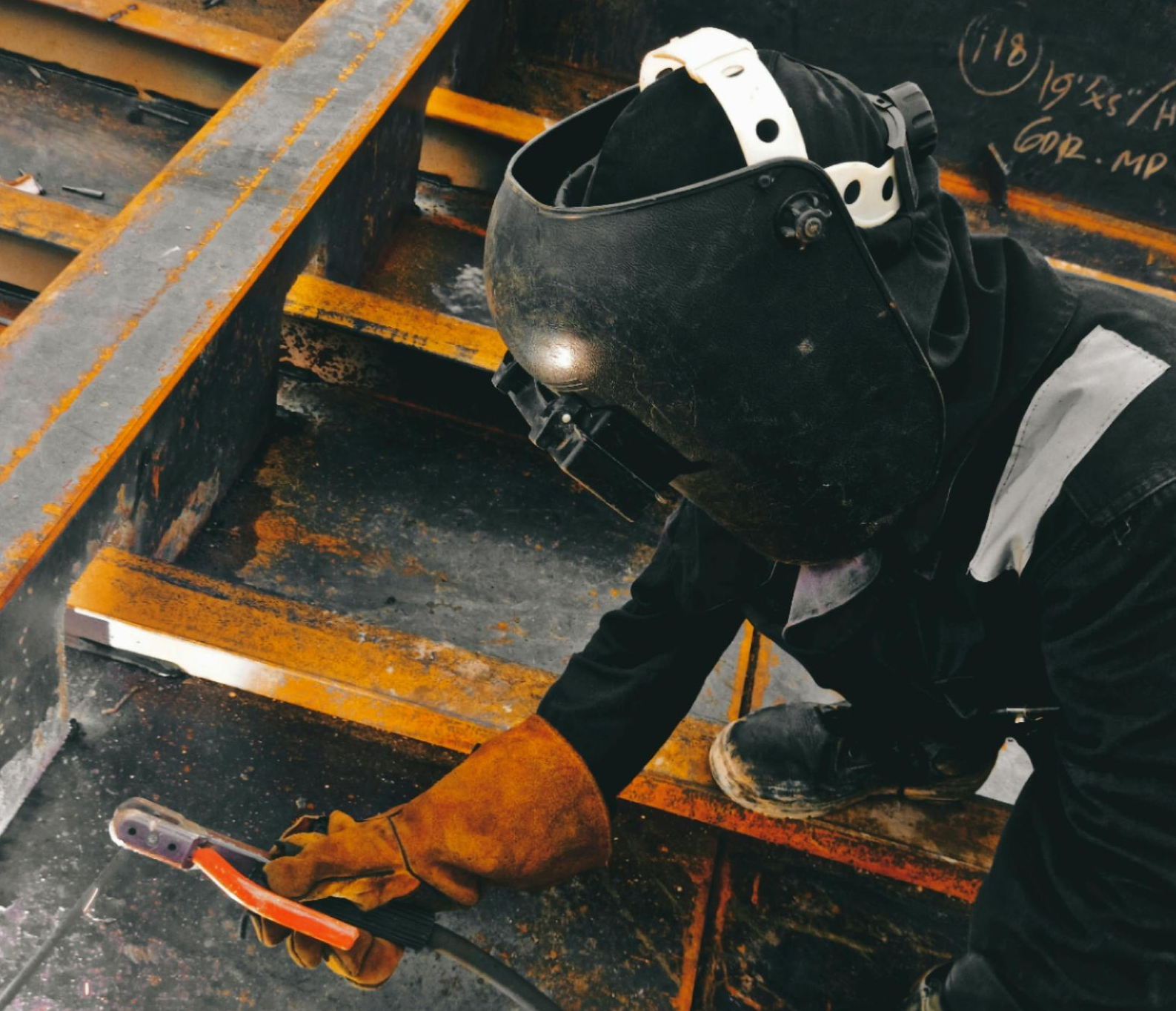
However, there are some important considerations worth being aware of. Higher strength steels are generally less forgiving than lower grade material if welding procedures are not followed correctly, making the experience and qualification of the welding team more important. At MAK Structures, all welding is carried out by our BS EN ISO 9601-1 coded welding team, ensuring full compliance with the relevant standards regardless of the grade being fabricated.
The surface preparation and protective coating requirements for structural steelwork are also grade-independent. Whether your project specifies S275 or S355, the shot blasting and painting processes we carry out at our Wakefield facility will be the same, governed by the corrosion protection specification rather than the steel grade.
Working with MAK Structures
At MAK Structures, we fabricate structural steelwork to both S275 and S355 specifications as standard, with full UKCA marking certification to Execution Class 3. Our in-house processing capabilities cover every stage of the fabrication process, from cutting and drilling on our KALTENBACH saw and drill line through to shot blasting, welding and painting.
If you have a project in the planning or procurement stage and want to discuss your fabrication requirements, our team is happy to help.