The Structural Steel Fabrication Process Explained: From Raw Material to Finished Steelwork
How Structural Steel Is Fabricated: A Step-by-Step Guide
Structural steel fabrication is the process of transforming raw steel sections and plate material into the finished components that make up a steel frame building, mezzanine floor, staircase or any other structural steel assembly.
For anyone commissioning structural steelwork, whether as a main contractor, a developer or a direct client, understanding what actually happens between placing an order and receiving finished steel on site can help you manage the process more effectively, ask better questions of your fabricator and plan your programme with greater confidence.
In this guide, we walk through the full structural steel fabrication process in order, from the arrival of raw material at the fabrication workshop through to the finished, coated steelwork that leaves for site.
Step 1: Design Information and Drawing Production
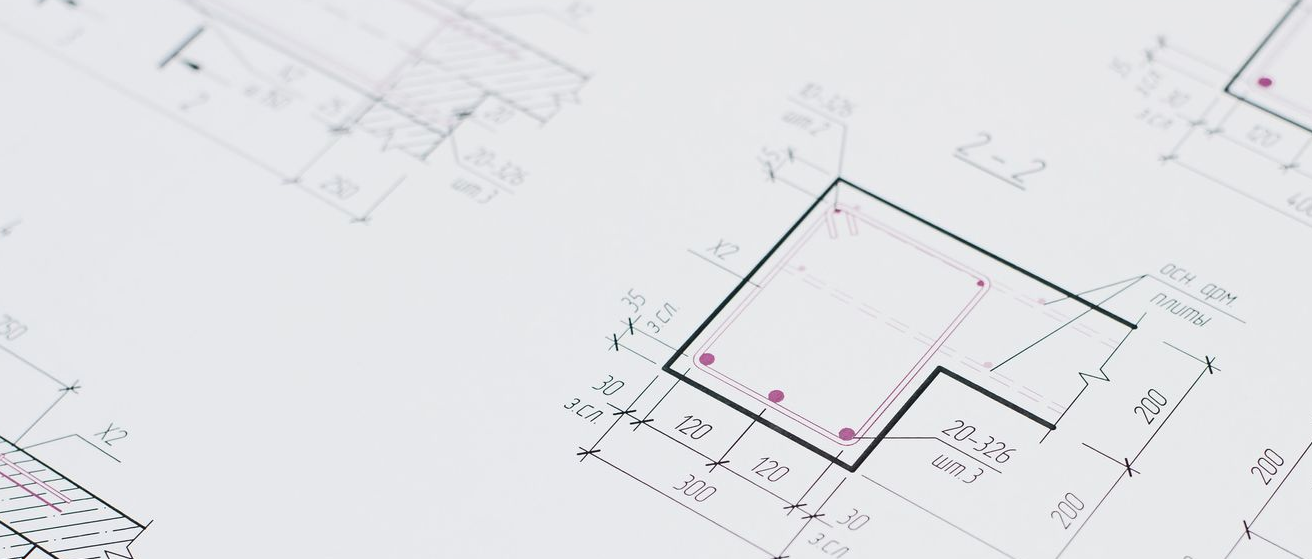
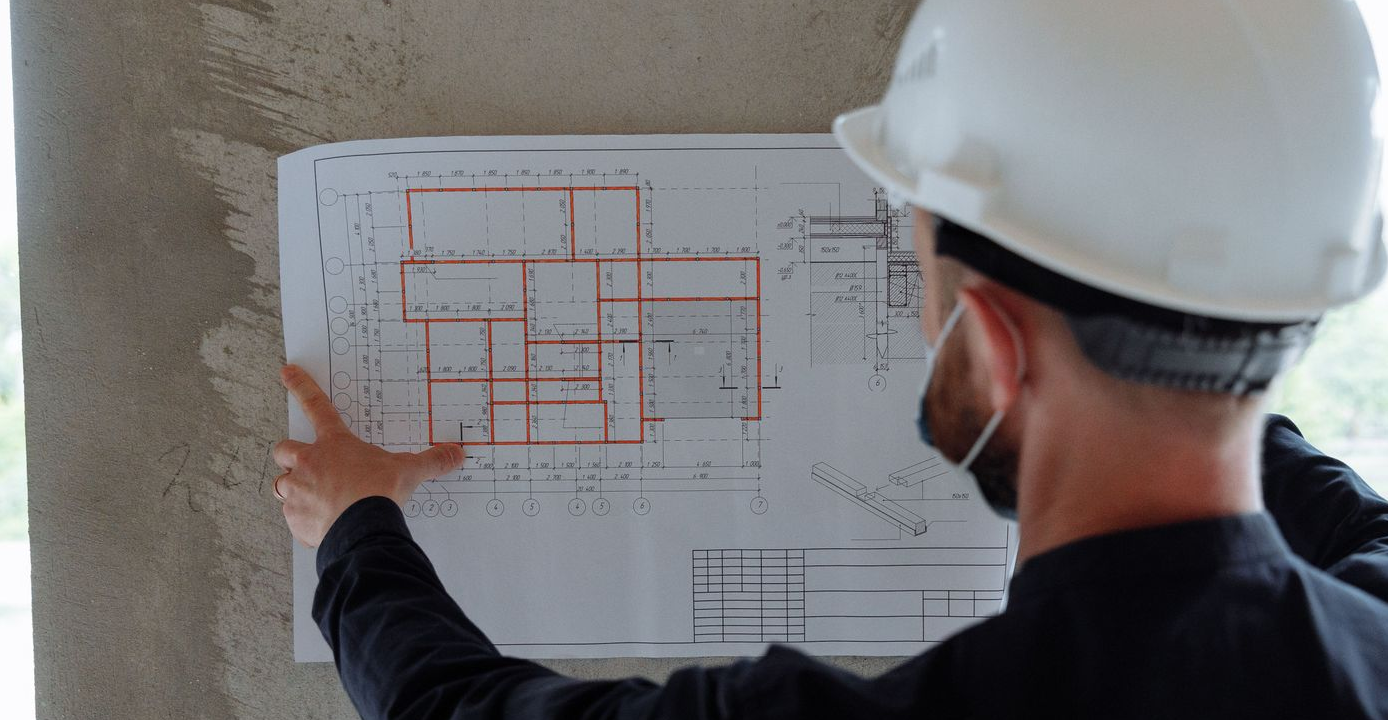
Before a single piece of steel is cut, the fabrication process begins with design information. The structural engineer's drawings and specifications are used to produce fabrication drawings, sometimes called shop drawings or detail drawings, which define exactly how each steel component is to be made.
Fabrication drawings show the precise dimensions of every beam, column, plate and connection detail, including hole positions, weld sizes, material grades and any special requirements. They are the primary reference document for every stage of the fabrication process and must be accurate, complete and approved before fabrication begins.
On most projects, fabrication drawings are produced either by the fabricator's own drawing office or by a specialist steel detailer working on behalf of the project team. Once produced, they are typically submitted to the structural engineer for review and approval before work starts.
The time taken to produce and approve fabrication drawings is one of the most common causes of delays on steel projects, particularly when design information is incomplete or changes are made late. Early engagement between the design team and the fabricator can significantly reduce the risk of drawing delays affecting the overall programme.
Step 2: Material Procurement
Once fabrication drawings have been approved, the fabricator places orders for the steel sections and plate material required for the project. Structural steel in the UK is typically procured from steel stockholders, who hold large stocks of standard rolled sections including universal beams (UBs), universal columns (UCs), circular hollow sections (CHS), square hollow sections (SHS) and rectangular hollow sections (RHS).
The most commonly used steel grades in UK structural steelwork are S275 and S355, with S355 being increasingly standard on commercial and industrial projects due to its higher yield strength.
Material procurement lead times vary depending on the sections required and market conditions, but standard sections are typically available from stockholders within a few days to a couple of weeks. Non-standard or heavy sections may take longer to source, which is why early confirmation of material requirements is important on projects with tight programmes.
All structural steel supplied for fabrication must be accompanied by mill certificates, which confirm the chemical composition and mechanical properties of the material and demonstrate compliance with the relevant product standards.
Step 3: Marking Out and Preparation
On arrival at the fabrication workshop, incoming steel sections are checked against the delivery documentation and the fabrication drawings. Material is then marked out to identify each piece by its drawing reference and confirm the cutting lengths and any special requirements.
This stage is important for quality control, ensuring that the right material is used for each component and that any non-conformances in the delivered material are identified and resolved before
fabrication begins.
Step 4: Cutting and Sawing
The first fabrication operation for most steel sections is cutting to length. In a modern steel fabrication workshop, this is typically carried out on an automated saw and drill line, which combines band sawing with multi-spindle drilling to cut sections to the required length and drill all bolt holes in a single pass through the machine.
Modern saw and drill lines, such as the KALTENBACH equipment used at MAK Structures, are CNC-controlled and operate from data extracted directly from the fabrication drawings. This eliminates manual marking out for drilling and ensures that hole positions are consistently accurate across all components.
The cutting process also includes any mitred or angled cuts required by the design, and for hollow sections, specific cutting operations may be required to prepare profile ends for welded connections.
Accurate cutting and drilling is fundamental to the quality of the finished steelwork, as errors at this stage will propagate through every subsequent operation.
Step 5: CNC Plasma Profiling
For steel plate, flat bar and more complex profiles that cannot be produced by sawing alone, CNC plasma profiling is used to cut shapes accurately from flat material.
A CNC plasma cutter uses a high-temperature plasma arc guided by a computer-controlled cutting head to cut through steel plate at high speed. The cutting path follows a programme generated directly from the fabrication drawings, allowing complex shapes, curves, large gusset plates, base plates and connection details to be cut to precise dimensions with clean, consistent edges.
At MAK Structures, CNC plasma profiling is carried out on our Esprit Lightning machine, giving us the capability to produce both simple and complex plate details in house, without reliance on external processing.
Step 6: Assembly and Fit-Up
Once all components have been cut, drilled and profiled, the next stage is assembly, sometimes called fit-up. This is the process of positioning the individual parts that will form a fabricated assembly, such as a column with its base plate and stiffeners, or a haunch connection on a portal frame rafter, in the correct position ready for welding.
Assembly is a skilled operation that requires accuracy and attention to detail. Components must be held in the correct position and to the correct tolerances before welding begins, as distortion during welding can cause dimensional errors that are difficult and expensive to correct after the fact.
Depending on the complexity of the assembly, jigs and fixtures may be used to hold components in position during welding, particularly for repetitive assemblies where consistent geometry is important.
Step 7: Welding
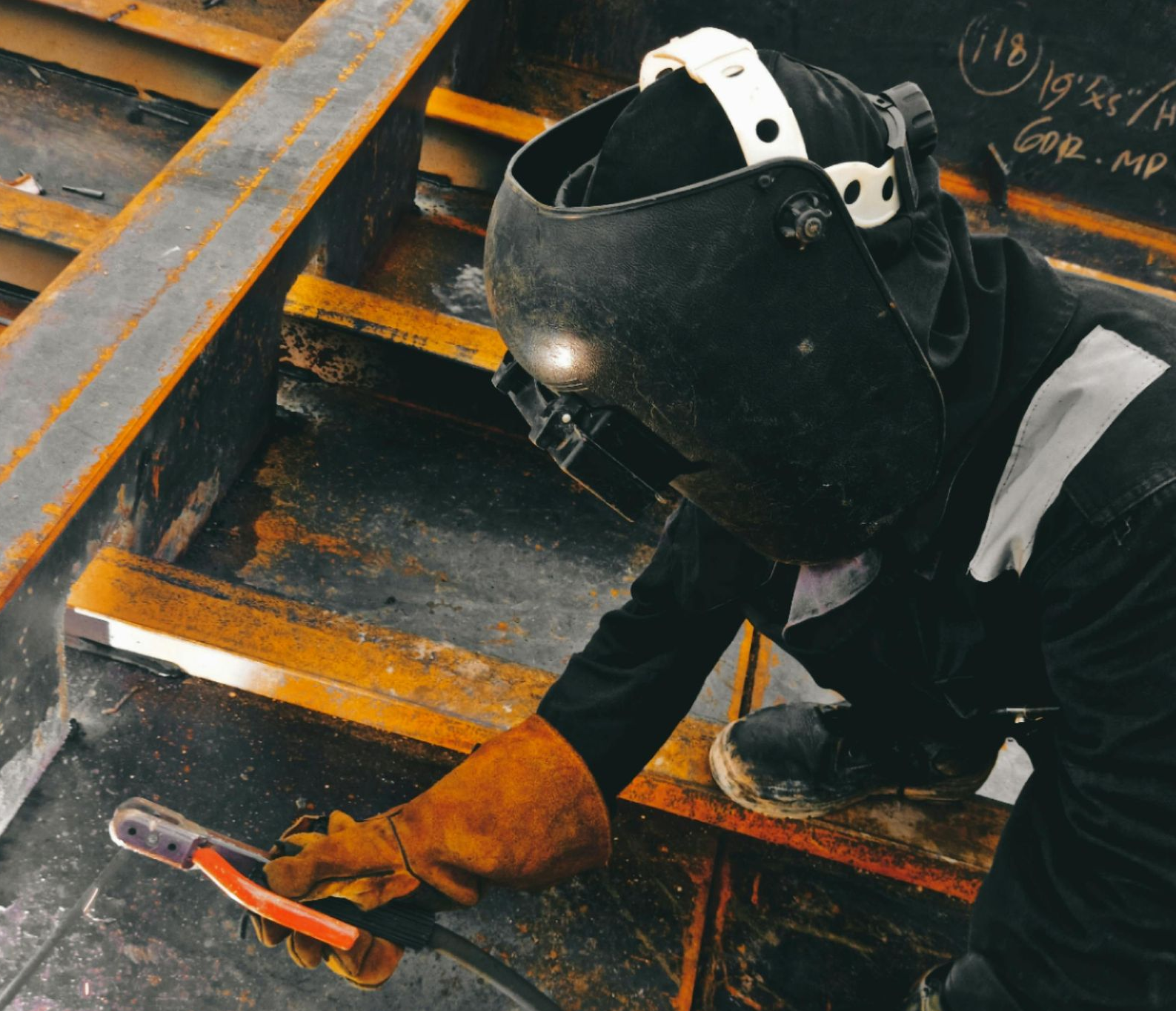
Welding is typically the most technically demanding and quality-critical stage of the structural steel fabrication process. It is also the stage that most directly determines the structural integrity of the finished steelwork.
Structural steel welding in the UK must comply with BS EN 1090 and the relevant welding standards, and all welders must hold the appropriate coded qualifications for the type and thickness of material they are welding and the welding process they are using.
At MAK Structures, all welding is carried out by our in-house team of BS EN ISO 9601-1 coded welders using metal active gas (MAG) welding as the primary process. This combination of qualified personnel and controlled workshop conditions ensures that every weld meets the required quality standard.
The most common weld types used in structural steel fabrication are fillet welds, which are used extensively for attaching cleats, end plates and stiffeners to primary sections, and butt welds, which are used where the full strength of the parent material needs to be developed at a joint.
Following welding, completed assemblies are visually inspected and, where the project specification or execution class requires it, non-destructive testing (NDT) such as magnetic particle inspection (MPI) or ultrasonic testing (UT) is carried out to verify weld quality.
Step 8: Straightening and Rectification
Welding inevitably introduces heat into the steel, which can cause localised distortion as the material cools and contracts. After welding, fabricated assemblies are checked for straightness and dimensional accuracy against the fabrication drawings, and any distortion that falls outside the permitted tolerances is corrected.
Correction methods include mechanical straightening using presses and rollers, and thermal straightening, which uses carefully applied heat to correct distortion without damaging the material. The tolerances for finished fabricated steelwork are defined by BS EN 1090 and the project specification.
Step 9: Shot Blasting
Before any protective coating is applied, the steel surface must be prepared to remove mill scale, rust, contamination and any welding residues. The standard method for surface preparation of structural steelwork in the UK is shot blasting, also known as abrasive blasting.
Shot blasting propels steel shot or grit at high velocity against the steel surface, mechanically removing surface contamination and creating a clean, roughened profile that provides a key for the coating system to bond to. The cleanliness and roughness of the prepared surface are defined by standards such as BS EN ISO 8501 (visual cleanliness) and BS EN ISO 8503 (surface profile).
The required surface preparation standard is determined by the coating specification and the corrosivity category of the intended environment, as defined by BS EN ISO 12944. For most structural steelwork, a minimum preparation standard of Sa 2.5 (near-white blast) is specified.
At MAK Structures, shot blasting is carried out in house at our Wakefield facility, giving us full control over surface preparation quality and allowing primer coats to be applied promptly after blasting to prevent flash rusting.
Step 10: Painting and Protective Coatings
Following shot blasting, the appropriate protective coating system is applied in accordance with the project specification. Painting in a structural steel fabrication workshop is typically carried out in controlled conditions that allow more consistent application and better quality than site painting.
A typical workshop-applied coating system for structural steelwork consists of a primer coat applied immediately after shot blasting to protect the prepared surface, followed by an intermediate coat and, where required, a finish coat in the specified colour. The number of coats, the paint products and the dry film thickness (DFT) required are all defined by the project coating specification.
For steelwork in more aggressive environments, such as external steelwork, coastal locations or industrial environments with higher corrosivity ratings, more complex multi-coat systems or alternative protection methods such as hot-dip galvanising may be specified.
At MAK Structures, all painting is carried out in house, ensuring that the surface preparation and coating application are managed within our own quality control systems.
Step 11: Inspection and Despatch
Before steelwork leaves the fabrication workshop, it is subject to a final inspection to verify dimensional accuracy, weld quality and coating compliance against the fabrication drawings and the project specification. Any non-conformances identified at this stage are resolved before the material is released for delivery.
Each piece of steelwork is then clearly marked with its drawing reference and component number to allow the site erection team to identify and position each element correctly during the erection sequence.
The logistics of delivering large structural steel components require careful planning, particularly for long sections, heavy lifts or deliveries to restricted urban sites. Loads are planned to comply with road transport regulations, and for oversized components, abnormal load permits and escort arrangements may be required.
Working with MAK Structures
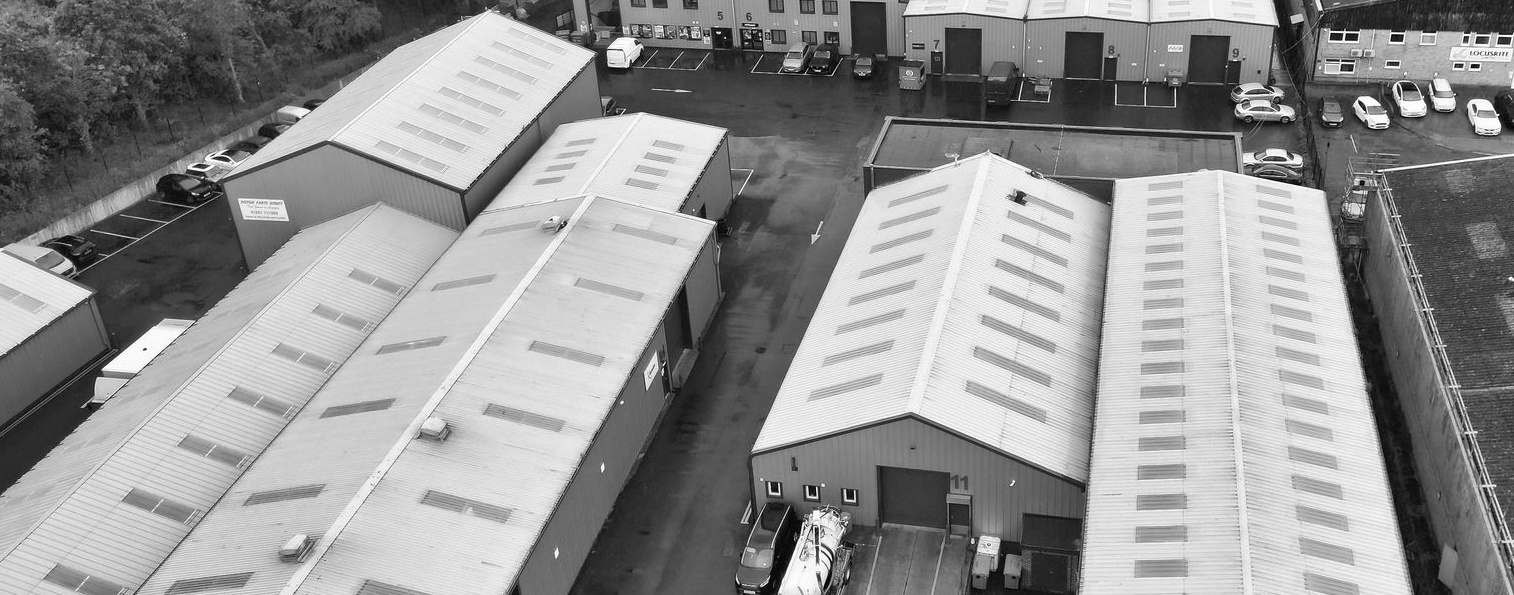
At MAK Structures, we carry out every stage of the structural steel fabrication process in house at our purpose-built 20,000 sq ft facility in Wakefield, West Yorkshire. From cutting and drilling on our KALTENBACH saw and drill line and CNC plasma profiling on our Esprit Lightning machine, through to coded welding, in-house shot blasting and painting, we provide a complete fabrication service under one roof.
We hold UKCA marking certification and fabricate to BS EN 1090 up to Execution Class 3, giving clients confidence that every component leaving our facility meets the required standards.
If you would like to discuss a project or find out more about our fabrication capabilities, our team would be pleased to
hear from you.