
Types of Structural Steel Sections Explained
A Guide to Structural Steel Section Types Used in UK Construction
Structural steel comes in a wide range of standard section shapes and sizes, each with its own structural properties, typical applications and naming conventions. For anyone working in construction, whether as a contractor, designer, project manager or client, understanding the main section types and when each is used will help you read drawings more confidently, have more productive conversations with engineers and fabricators, and make better-informed decisions on your projects.
This guide covers all of the main structural steel section types used in UK construction, explaining what each one looks like, how it performs structurally, and where you are likely to encounter it.
Universal Beams (UB)
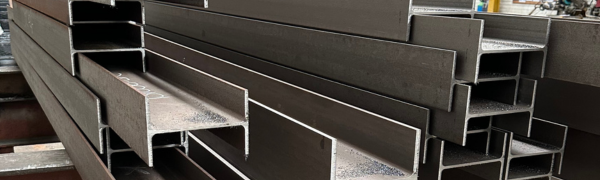
Universal beams, commonly abbreviated to UB, are the most widely used structural steel section in UK construction. They are also sometimes referred to as I-beams or H-beams due to their cross-sectional shape, which consists of two horizontal flanges connected by a vertical web.
The proportions of a universal beam are optimised for bending resistance. The flanges are relatively wide and the web is relatively deep, which puts as much material as possible at the top and bottom of the section where bending stresses are highest, and uses the web primarily to resist shear forces.
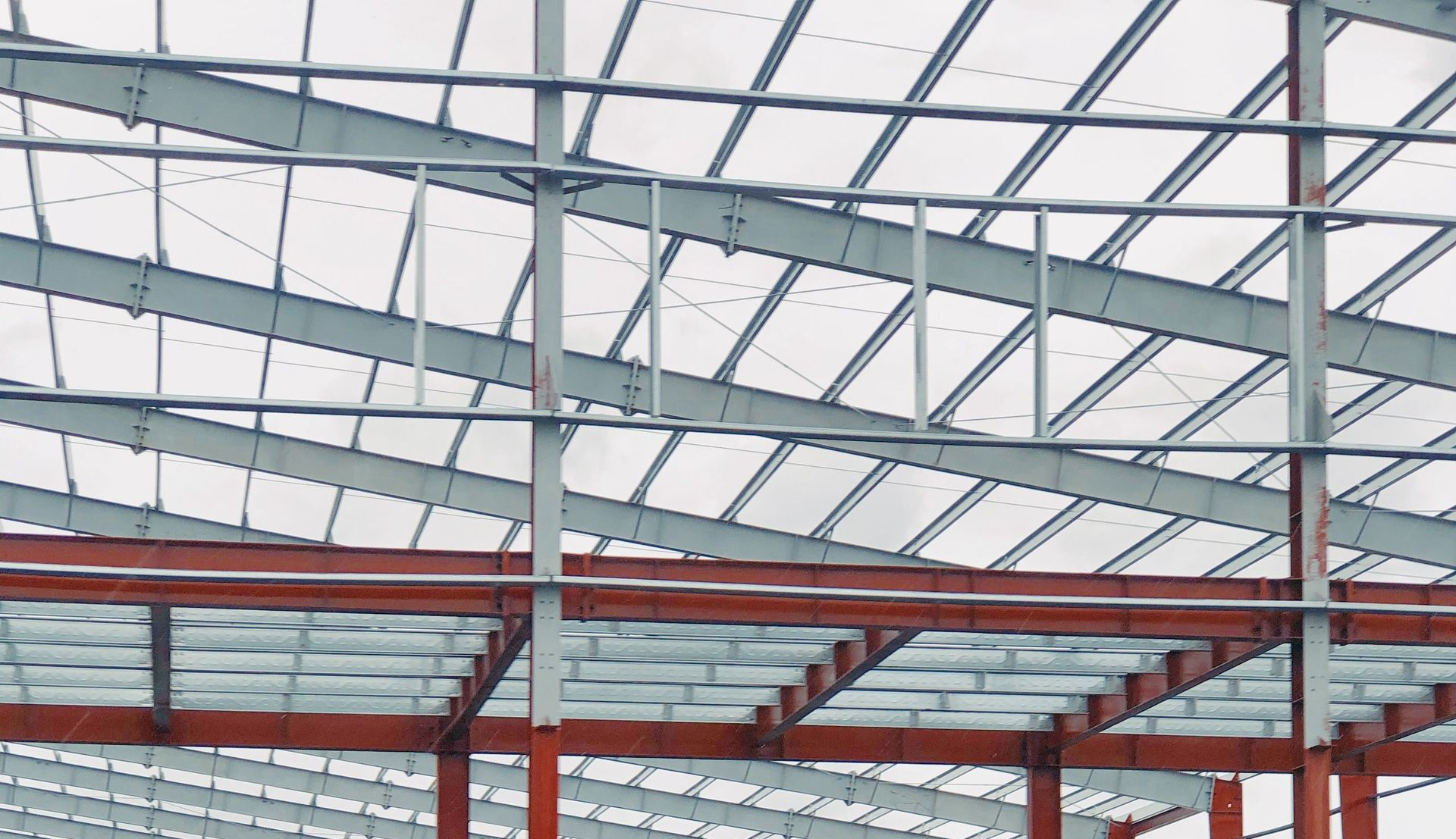
Universal beams are used wherever a structural member needs to carry loads primarily in bending, which in practice means almost every horizontal spanning application in a steel-framed building. Floor beams, roof beams, lintels over openings, crane girders and transfer structures are all typical applications.
UB sections are described by their nominal depth and mass per metre, for example a 457x191x82 UB is approximately 457mm deep, 191mm wide at the flange and weighs 82 kilograms per metre of length.
Universal Columns (UC)
Universal columns, abbreviated to UC, have a similar cross-sectional shape to universal beams but with proportions optimised for axial compression rather than bending. The flanges and web of a UC are of approximately equal depth, giving the section a more square appearance than a UB and making it equally efficient when loaded from multiple directions.
As their name suggests, universal columns are used primarily as vertical compression members in steel-framed buildings, transferring loads from floors and roof down to the foundations. They are also used for heavily loaded short-span beams where the depth of section available is limited, and as posts in mezzanine floors and staircases.
Like universal beams, UC sections are described by their nominal depth, flange width and mass per metre, for example a 203x203x60 UC.
Circular Hollow Sections (CHS)
Circular hollow sections are steel tubes with a circular cross-section. Their closed hollow form gives them excellent structural properties in both bending and torsion, and they are equally strong and stiff in all directions, which makes them well suited to members that are loaded from multiple directions or that need to resist twisting.
CHS sections are commonly used for columns in exposed architectural steelwork, diagonal bracing members, barrier and handrail posts, and structures where the circular form is preferred aesthetically. They are also widely used in space frames and long-span roof structures.
One practical consideration with CHS sections is that the connections at their ends require more complex fabrication than the equivalent connections for open sections, as the ends typically need to be profiled or coped to fit against the connecting member.
CHS sections are described by their outside diameter and wall thickness, for example a 139.7x5 CHS has an outside diameter of 139.7mm and a wall thickness of 5mm.
Square Hollow Sections (SHS)
Square hollow sections are closed steel tubes with a square cross-section. Like CHS sections, they are strong in all directions and have good torsional stiffness, but their flat faces make connection details simpler and allow them to sit flush against flat surfaces more easily.
SHS sections are used for columns, posts, bracing members and architectural steelwork where a clean, rectilinear appearance is preferred. They are also commonly used for lightly loaded structural members in mezzanine floors, staircases and secondary steelwork.
SHS sections are described by their overall dimension and wall thickness, for example a 100x100x5 SHS has a 100mm square cross-section with a 5mm wall thickness.
Rectangular Hollow Sections (RHS)
Rectangular hollow sections share the closed hollow form of SHS and CHS sections but with a rectangular cross-section. This gives them greater bending resistance in one direction than the other, making them more efficient than SHS when the loading direction is known and consistent.
RHS sections are used for beams, lintels, purlins, side rails and many other structural applications where a hollow section is preferred but a square cross-section would be unnecessarily deep or wide. They are also used extensively in architectural and secondary steelwork.
RHS sections are described by their two overall dimensions and wall thickness, for example a 200x100x8 RHS is 200mm in the deep direction, 100mm wide and has an 8mm wall thickness.
Angles (Equal and Unequal Leg)
Steel angles have an L-shaped cross-section consisting of two legs meeting at a right angle. Equal leg angles have both legs of the same length, while unequal leg angles have one leg longer than the other.
Angles are one of the most versatile sections in structural steelwork and are used in a huge range of applications, from lightly loaded bracing members and secondary structure to connection cleats, brackets and gusset plates. They are also used as edge trims and stiffeners on fabricated assemblies.
Equal leg angles are described by their leg length and thickness, for example a 100x100x10 angle has legs of 100mm and a thickness of 10mm. Unequal leg angles include both leg dimensions, for example 150x90x12.
Channels (Parallel Flange Channels and Tapered Flange Channels)
Steel channels have a C-shaped cross-section with a web and two flanges projecting in the same direction. They are available in two forms: parallel flange channels (PFC), which have flanges of uniform thickness, and the older tapered flange channel form which has flanges that taper towards their tips.
Parallel flange channels are more commonly used in modern structural steelwork and are preferred for most applications due to their consistent flange thickness making connections more straightforward.
Channels are used for lintels, edge beams, purlins, side rails, frames for doors and openings, and many secondary and tertiary structural applications. Their open C-shape makes them easy to connect to other sections and to use as framing around openings.
PFC sections are described by their depth, flange width and mass per metre, for example a 200x75x23 PFC.
Flat Bar and Plate
Structural steel flat bar and plate are used extensively in fabricated assemblies as connection elements, stiffeners, base plates, end plates, gusset plates and cover plates. They do not typically carry primary structural loads on their own but are essential components in the connections and details that hold the primary structure together.
Plate is also used to fabricate built-up sections such as plate girders, where the standard range of rolled sections is not deep or strong enough for the application. A plate girder is fabricated by welding together a web plate and two flange plates to form a large I-section of whatever dimensions the structural design requires.
Flat bar is described by its width and thickness, for example 150x20 flat bar. Plate is described by its thickness and can be cut to any plan size required.
Flats, Rounds and Other Sections
In addition to the main section types above, structural steelwork also makes use of a range of smaller and more specialist sections. Flat bar in smaller sizes is used for bracing, ties and strap connections. Round bar is used for threaded tie rods and tension members. Tee sections, cut from universal beams or columns, are used in specific structural applications. And fabricated sections of almost any shape can be produced by welding together plate and standard sections where a standard rolled section does not meet the design requirement.
Which Section Types Does MAK Structures Work With?
At MAK Structures, we fabricate steelwork using the full range of standard rolled sections described above, as well as fabricated assemblies combining sections and plate in whatever configuration the design requires. Our in-house capabilities include cutting and drilling on our KALTENBACH saw and drill line, CNC plasma profiling on our Esprit Lightning machine, welding by our BS EN ISO 9601-1 coded team, and in-house shot blasting and painting, giving us the capability to process and finish sections of all types to the required standard.
All fabrication is carried out under UKCA marking certification up to Execution Class 3 at our purpose-built 20,000 sq ft facility in Wakefield, West Yorkshire.
If you have a project and would like to discuss fabrication requirements or request a quote, our team would be pleased to hear from you.